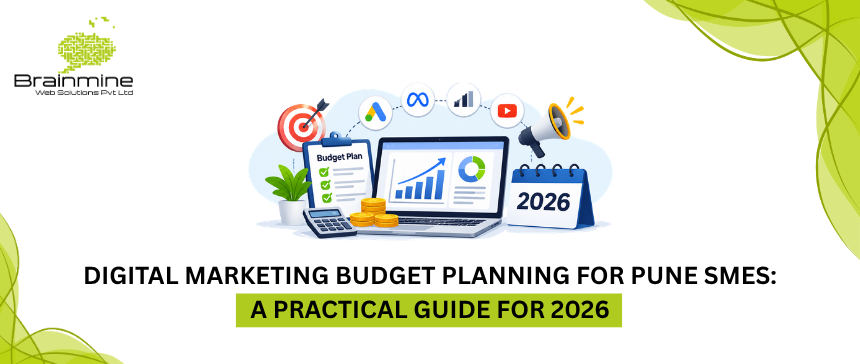
The first question most business owners ask a digital marketing company in Pune is simple: how much should we spend, and on what? There is no single answer, and anyone who gives a fixed formula without asking about your business is guessing. There is, however, a sound way to think about it. Your budget should follow your stage, your sales cycle and how quickly you need results.
This guide gives Pune small and mid-size businesses a practical framework for planning a 2026 digital marketing budget, based on what each channel actually does.
Start With Your Stage
Early Stage: No Steady Flow of Leads
If enquiries are inconsistent, you need demand quickly. Weight your budget toward paid search, a strong landing page, a well-managed Google Business Profile and fast lead follow-up. Keep a smaller share for SEO foundations so that organic visibility starts building in the background.
Growing Stage: Leads Exist, Predictability Does Not
Here the aim is to reduce dependence on any one source. Add SEO content, retargeting, review generation, email and WhatsApp follow-up, and social proof such as case studies. Paid media continues, but organic channels take a bigger share each quarter.
Established Stage: Strong Brand, Need Efficiency
Invest in authority, AI search visibility, CRM-driven remarketing and video. At this stage, improving conversion and retention often produces more than adding new channels.
What Each Channel Does for Your Budget
- SEO and content: compounds over time and lowers cost per lead in the long run, but takes months to build
- Paid search and social ads: immediate and controllable, but stops when spending stops
- Social and short-form video: builds recognition and trust, and supports every other channel
- Owned channels (website, email, WhatsApp, CRM): turn existing interest into customers and cost relatively little
A healthy plan uses a mix, with each channel doing the job it is best at. A digital marketing agency in Pune that recommends only one channel for every client is selling a service, not building a plan.
An Illustrative Starting Split
These are starting points to adapt, not rules. A business with no steady leads might put roughly half of its budget into paid media and conversion work, with the remainder shared across SEO, local presence and content. A business with steady leads might tilt toward SEO, content and owned channels, with paid media used to scale what already converts. In both cases, hold back a portion for testing new creative, audiences and pages, because the best returns usually come from something you learn along the way.
Costs People Forget
- Landing pages and website improvements that lift conversion
- Content and creative production, including video
- Tools for tracking, reporting and CRM
- Staff time to follow up leads quickly
Ad spend is only part of the cost. A business that spends well on ads but replies to enquiries two days later is wasting most of it.
How to Judge Whether the Budget Is Working
Track cost per qualified lead, the share of leads that become customers, calls and WhatsApp enquiries, repeat enquiries, and branded search growth. Review these monthly and make one or two decisions each time: move budget toward what works, cut what does not, and test one new idea.
Common Budget Mistakes
- Spreading a small budget across too many channels
- Starting paid campaigns without tracking in place
- Expecting SEO to behave like ads, or ads to build lasting assets
- Judging results on likes and reach instead of enquiries
- Changing strategy every month before data has built up
A Simple Quarterly Review Rhythm
Plan the year in quarters. At the start of each quarter, pick one primary goal, such as more qualified enquiries, a lower cost per lead or stronger repeat business. Set a budget for each channel against that goal, and agree on what a good result looks like before spending begins. At the end of the quarter, compare results to the plan, keep what worked, and move money away from what did not. This rhythm is slow enough to give channels time to perform and fast enough to correct mistakes before they become expensive.
Choosing a Partner
Look for a team that asks about your sales process before proposing channels, shows how it measures lead quality, and explains trade-offs openly. If organic growth is a goal, check that the same team can support it, for example through a dedicated seo company in Pune. At Brainmine, we plan budgets around your goal and stage, and we adjust as results come in.
Want help planning a realistic digital marketing budget for your business? Talk to Our Team